
Thanks to Dr. Stacey Patton and classmates, I am learning how to vlog! I have lots to learn and this fun!
Author: themil26_wp
September in Minnesota by Sheri LeClair Banitt
These are days before Labor day, right before school starts. We are supposed to be visiting the Minnesota State Fair. We should be walking shoulder to shoulder with thousands of others on a hot sunny day, eating food on a stick and people watching. We should be in the dairy building checking out Princess Kay of The Milky Way, carved out of butter. We should be awed at the crop art and tasting Minnesota grown apples and honey. We should be checking out livestock and watching horse shows. We should be buying trinkets and gadgets and spending money until our pockets are empty and we are too tired to take another step. We should be heading home with full stomachs and happy hearts. But we’re not.
We are at home with our memories. The weather is right, the time is right; we long for the fair, but we can’t go. The corona virus threatens to get us at every turn. We dare not mingle with the 250,000 other Minnesotans who typically attend the fair each day. We are grounded. We are safely tucked in at home with only our closest circles of people. We wear our masks when out in public. We long for next year and we hope things will go back to normal. We know the normal will never be the same. Our new normal will include the corona virus and all of its ravages. We hope for a vaccine. We hope our loved ones do not get sick and we make the best of what we have right now.
We can still enjoy the cooler days. We can walk in the breeze and say goodbye to the monarchs and hummingbirds. We can have one last meal outdoors. We can have late evening bonfires and roast marshmallows around the fire. And we can start planning yard displays of pumpkins and haybales and scarecrows.
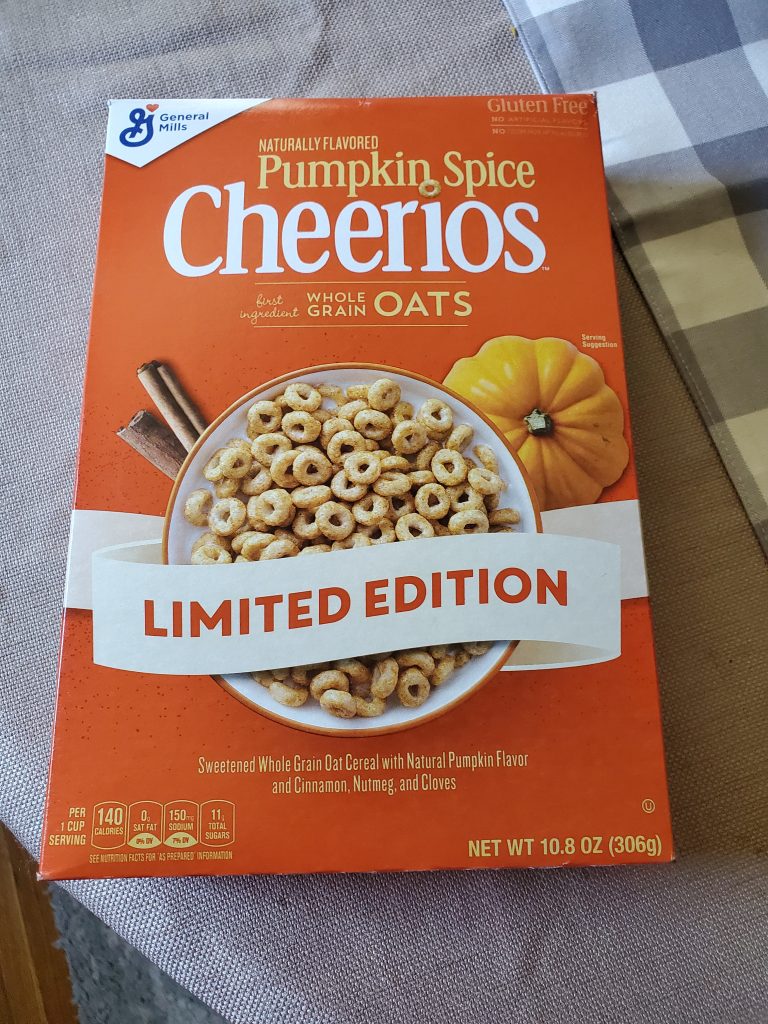
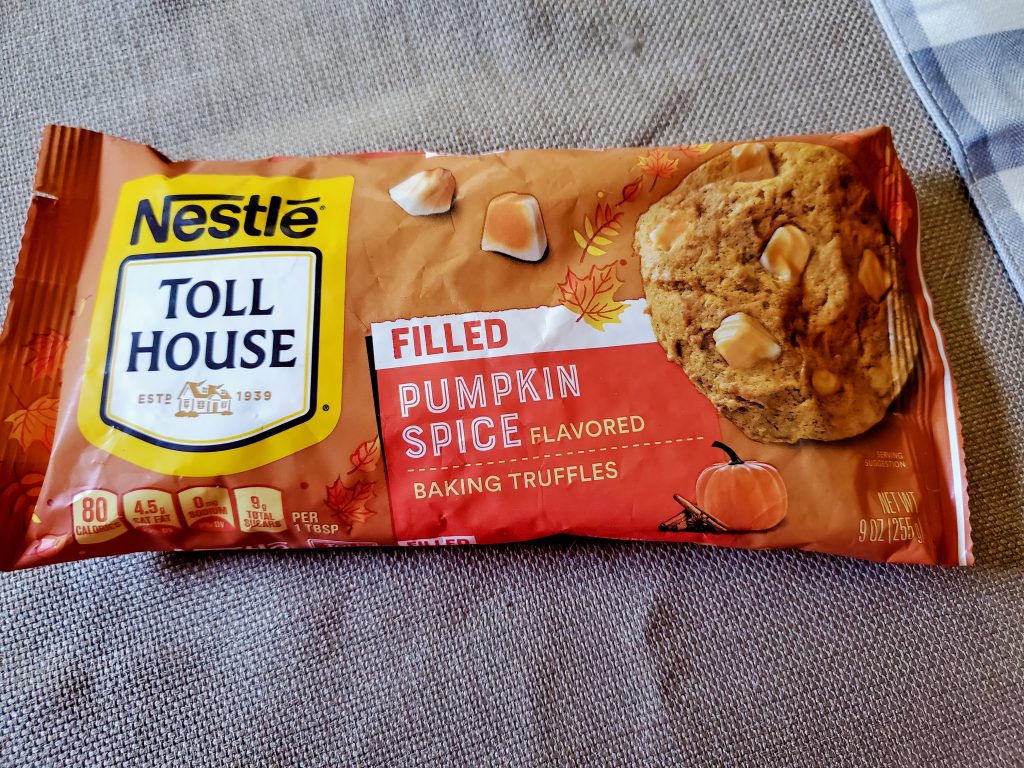
We are at the beginning of pumpkin spice season, and nothing can change that!
My Final Project with Dr. Stacey Patton and Class by Sheri LeClair Banitt
We Learned to Make a Timeline by Sheri LeClair Banitt
In my Digital Media class with Dr. Stacey Patton, we learned to make a timeline. This was not easy. We had to use several digital sources to come up with a three-moment timeline. I had to fiddle with it for over an hour and start over three times, but I did it! Our next project will be a 10-moment time line of our own life using pictures, videos and sound clips of our own history. I am afraid and excited to get started on that one.
Here’s my practice timeline featuring Carol Burnett.
C19 Quarantine Hobbies #4 by Sheri LeClair Banitt
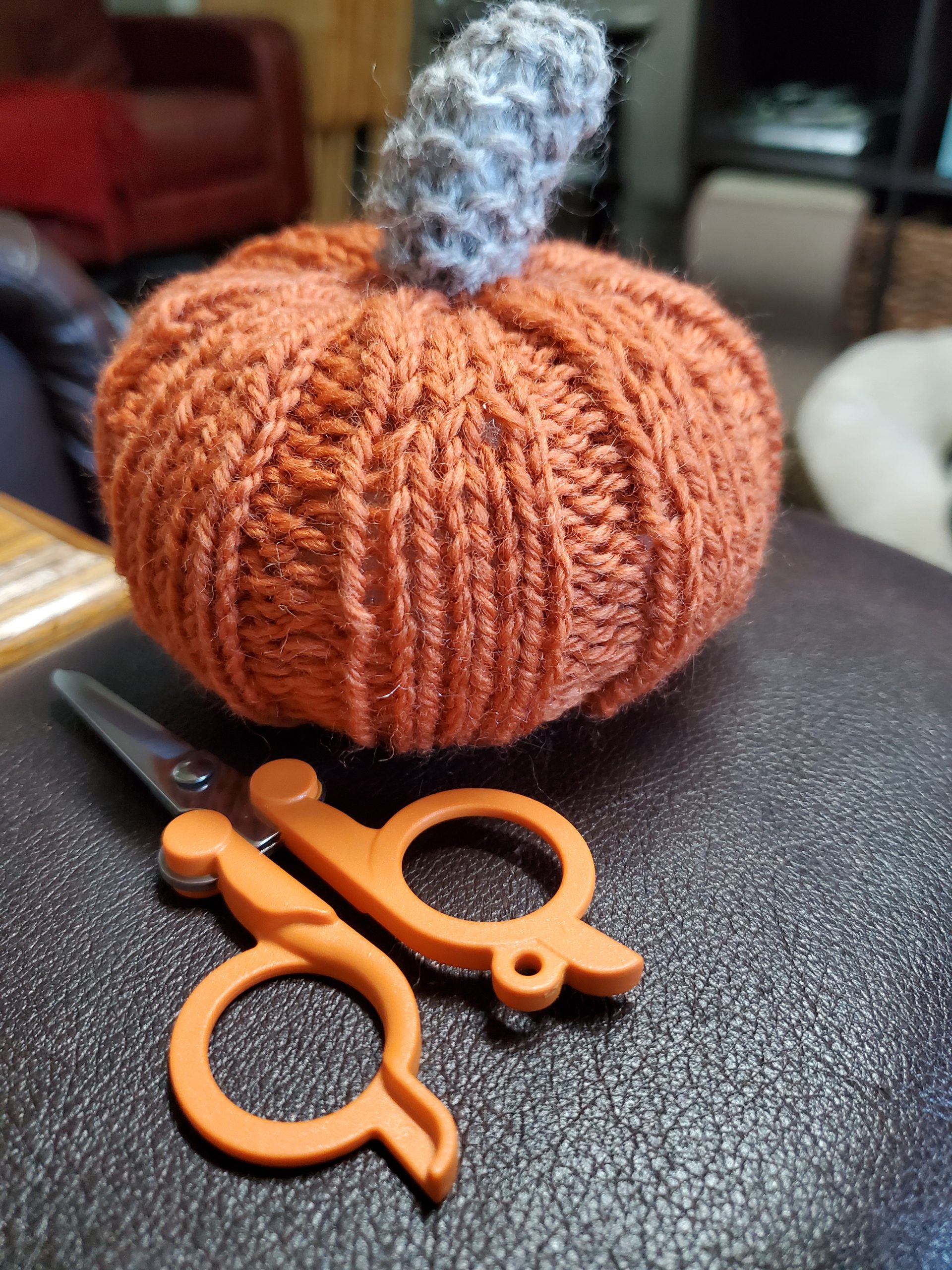
Knitting Pumpkins
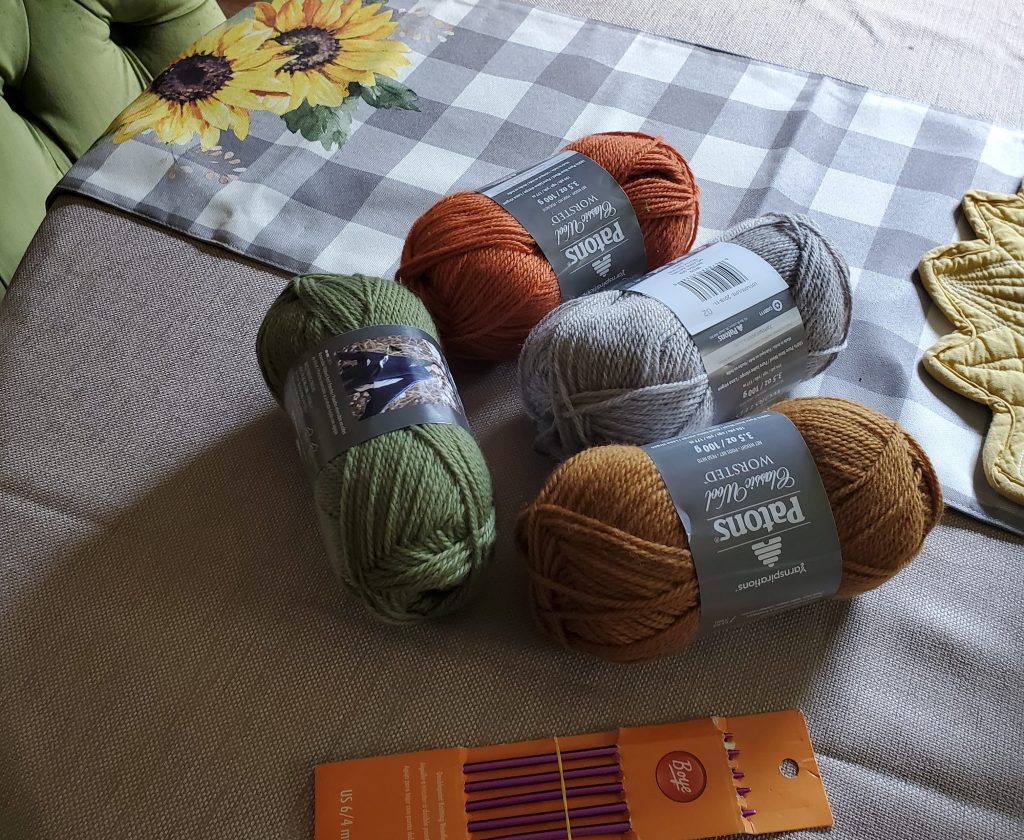
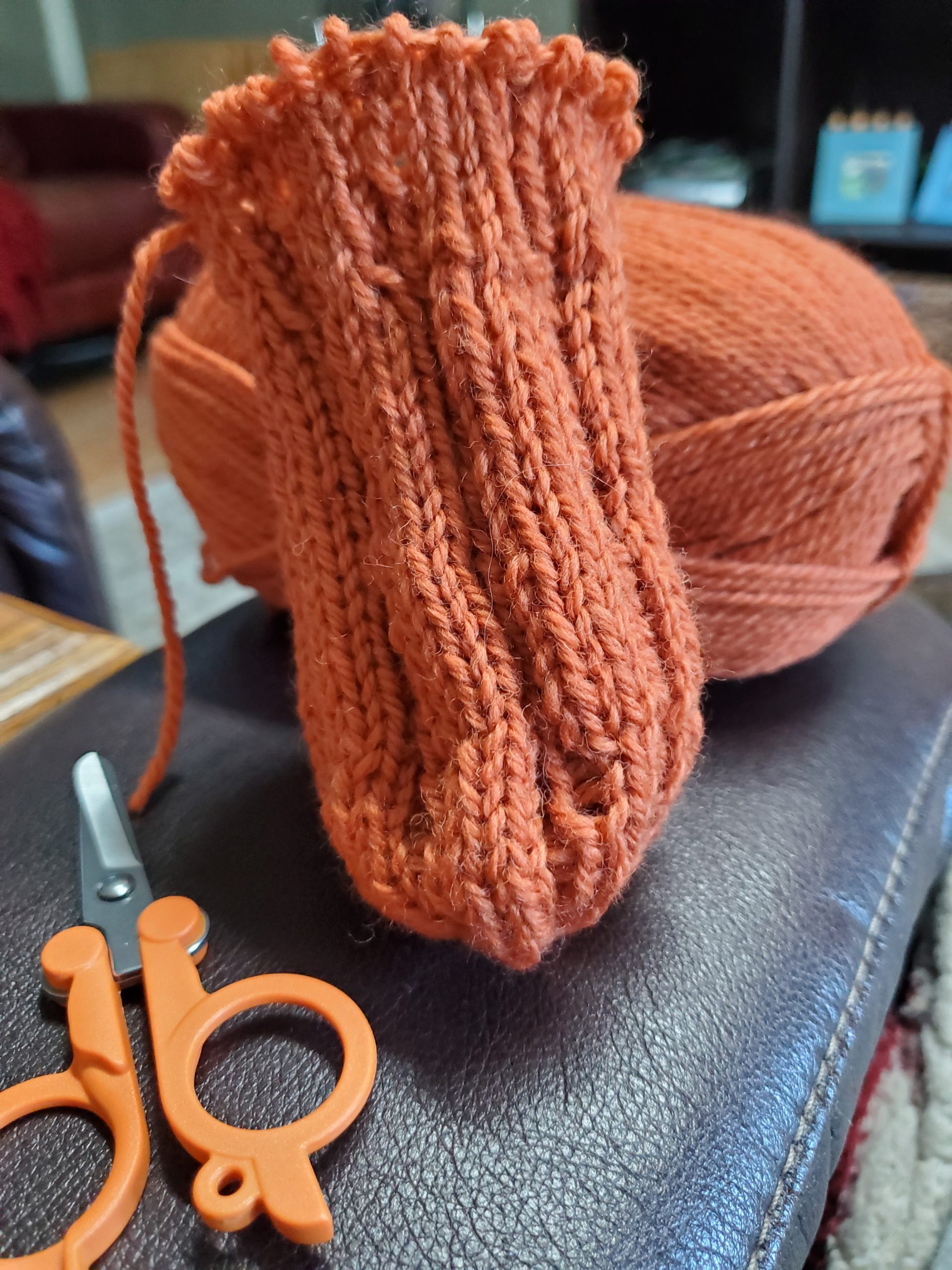
It’s that time of the summer where you’re tired of mowing the lawn and the petunias are looking scrappy. But it’s not over yet and there are still those days with sweltering heat and humidity. You could go outside and weed the garden. Or you could stay inside with the air conditioning and Netflix and plan for fall. That’s what I did. I made a pumpkin ahead of pumpkin spice season so I’ll be ready when it’s time to switch over.

I found this free Knit Pumpkin pattern by Katrina McNerney
https://www.ravelry.com/patterns/library/knit-pumpkin
Make Room for Growth by Sheri LeClair Banitt
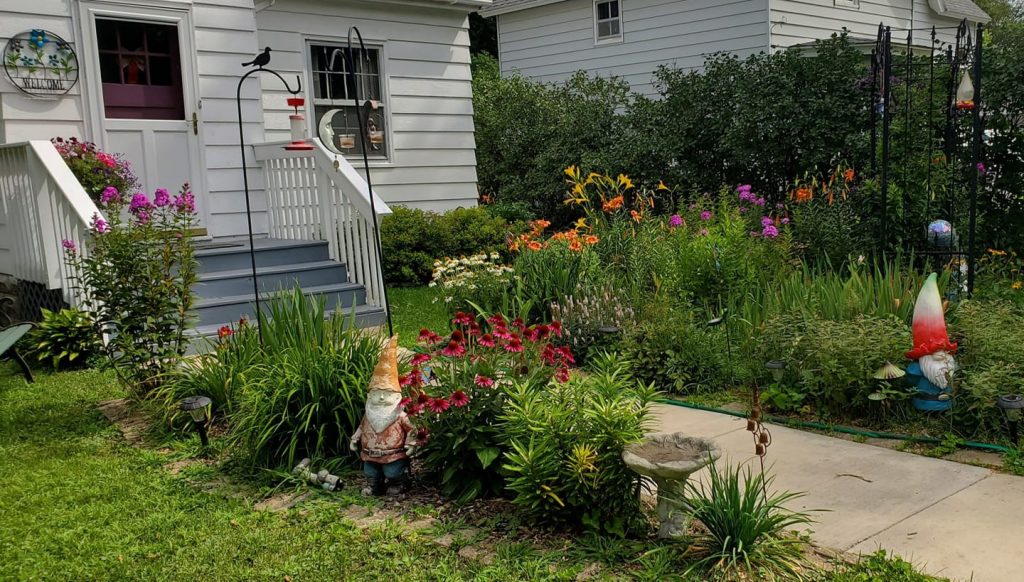
I am part of a new community that is giving me space to grow. I am learning what it means to have white privilege in America and how life is more difficult without it. I am growing my empathy and understanding for people whose experience is different from mine.
Many boomers are faced with the reality that we can no longe ignore the racism in our society. Some double down on long held prejudices and harmful ideology. Some insist they are not racist while upholding systems in place that limit the potential of our neighbors of color. Some, like me will be thankful for the space to learn and grow.
I thought it was good that I never considered race when meeting or interacting with people. But it was only good for me, because being ignorant about race and color is accepting the systemic racism that is part of our American culture. In the aftermath of the George Floyd murder, and the media coverage of the Black Lives Matter movement, I am becoming more aware of the racism surrounding me and more sensitive to how that affects people of color.
I am fortunate to be taking a class learning about digital media offered by Dr. Stacey Patton. My daugher who follows Dr. Patton on twitter shared a link with me where I signed up for the class. 300 students were enrolled and we began a Zoom journey together to learn how to manage a blog on Word Press. It was timely for me because just weeks before I started a blog on Word Press. I didn’t have any experience and didn’t know how to proceed. I could only add ‘New post’. Now I have learned to embed videos and sound tracks. Next week I will be creating a timeline of my own life.
While I appreciate learning about the technology that will help me with my blog, I feel that the greater value is in the community and fellowship of the other creatives in class. It is a new experience for me to be in the minority where I am one of a handful of white students amid a majority of people of color. I am immersed in a class of people who are the same as me and different from me. We are the same because we share a common interest. We are different because we experience racism in different ways.
The assignments we are given are creative and meant to teach us about technology. The topics are personal and we choose them ourselves. This is where I feel uncomfortable, privileged and frivolous. My life experiences feel normal to me; entertaining and fun. When I look at many of the other submissions, I see something more. I see people being vulnerable about themselves, their lives and experiences. I see pain and anger and activism and advocacy. I see real people dealing with real trauma that is happening in the same spaces where I live but that I don’t experience. And maybe that is why I scratch the surface in my writing, so I don’t have to deal with the hard problem of racism.
I want my classmates to know that while I do not experience the same difficulties, I have experienced some difficulties in my life, and that creates a bridge of empathy. I want to share with you the things that make us the same so we can laugh and enjoy each other. I want to learn about the things that make us different so I can understand what you need and how I can help you get that.
My heart is full of love, even when my actions have fallen short. My mind is full of ideas, even when I have not said them out loud. I am starting where I am, with what I have, doing what I can. I am a Digital Media Bawse in progress. Bear with me, I’m growing.
River Walk 2020 by Sheri LeClair Banitt
There are two rivers that merge together right outside my home; the Little Cannon River and the Big Cannon River. Join me on my walk as I show you some of my favorite spots.
Daisy and Jill by Sheri LeClair Banitt
Daisy’s surprise puppy; watch Jill grow into Doghood.
My First Digital Story by Sheri LeClair Banitt
Thanks for the lesson Dr. Stacey Patton.
A Real Life Cat Lady-saving one litter at a time. By Sheri LeClair Banitt
With my husband’s help, I feed a migrant community of feral cats. Twice daily, we greet 1 black cat and 3 tortoise shell cats at the food pans in the bushes. Sometimes there is a black and white one, and sometimes an orange or tiger stipe cat and we can tell you their ancestry going back 5 generations.
I’m not bragging about this, and frankly, I wish I didn’t have to talk about this at all. We came upon this cat population accidentally and now we’re trying to work our way out of it.
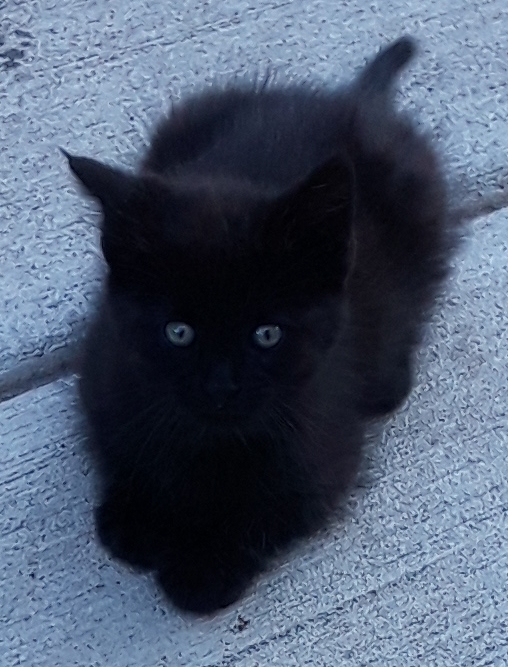
I came to know about feral cats because I am an avid gardener and animal lover. When I first discovered a little black kitten living in my garden under the Hostas, it was natural to want to feed him. He wasn’t friendly, and always ran when he caught sight of me, but he looked hungry, so I left food out for him. He was black, so we called him Midnight. He stuck around all that first summer and showed up periodically over the following winter. When summer came, Midnight disappeared and that was when a funny thing happened.


To my surprise the Hosta’s revealed a whole litter of kittens! They were tiny, and no sign of mamma cat but I figured she was around somewhere.
We left food out for the mamma kitty, and eventually we were able to handle the kittens with mamma nearby. Just as we were about to catch the whole bunch of them for re-homing, mamma kitty disappeared and took all the kittens with her. Later that year when it got cold, Midnight and Mamma kitty returned and we fed them intermittently as they showed up.
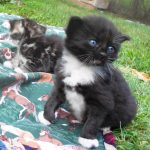
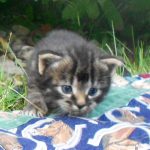
It seemed that my garden was growing kittens. Year after year, kittens were born in the spring and the challenge was to find them and rehome them before the mamma cat disappeared. Whenever we found them, the mamma would move them to a new spot. She often put them under the prickly bush on top of a pile of rocks. This seemed inhumane, so I went online to order a cat house where litters could live until they were old enough to re-home.
At the end of the order form, it said “personalize your house for no extra charge”. I didn’t have a particular cat’s name to put on the house, but my daughter had a great idea. And that is how the Halfway House came to be located in my lilac bushes.
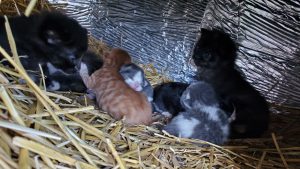

Feral Cat Facts and FAQs
- Feral cats are domestic cats that were born and raised with little or no contact with people
- Feral cats are not stray cats. Strays are homeless pet cats, while ferals were born in the wild, and were never socialized to humans. They are usually unseen by humans.
- These feral cats have highly developed instincts for survival, so they are extremely fearful of people. You don’t see them, but they are there in all communities.
- Many people believe that cats can fend for themselves. Cat owners often abandon their cats when they move or simply no longer want the responsibility of pet ownership. Those cats survive only if they find food, shelter, and avoid dangers such as injury from cars, dogs, other cats, or abusive humans.
- Feral cats often live in colonies, forming groups around food sources.
- They are rarely spayed, neutered or vaccinated, and their offspring are raised without human contact. Within a few years, one or two cats can produce a colony of twenty or more.
- Feral and stray cats live difficult lives as they are susceptible to disease, starvation and the freezing conditions of trying to survive a Minnesota winter. Left on their own, they breed future generations of feral who live the same difficult lives.
- The can also spread disease and harm native bird populations thru predation.
- Killing feral cats does not reduce their numbers, as studies show new feral cats will soon take up their place.
- There are two humane ways of controlling the feral cat population. One is by TNR – Trapping, Neutering and Returning them to where they were trapped.
- The other is trapping and euthanasia.
- Feral cats can have happy healthy lives outdoors. Humans can help that by TNR’ing feral cats.
- Since house cats can sneak outdoors, you should always vaccinate, spay and neuter your pets and keep them indoors.
- If you feed feral cats, you have to TNR, to prevent overpopulation.
My journey from Midnight to the Halfway House has taught me much about feral cats. Over the past several years we have re-homed over 25 kittens. They have all made wonderful pets.
Now we have a colony of 4 female cats and it is too many. We have since learned that there used to be funding in our area that allowed a local animal rescue to feed the feral cats and spay/neuter and vaccinate them. As the funding dried up and disappeared the cats made their way to our neighborhood, which is close to the river so they have a water source and close to a restaurant which may provide garbage to eat. When two others on the block moved and stopped feeding the cats, they found their way to our house.
I came to know about feral cats by chance encounter with one tiny kitten. You should care about feral cat populations because they could pass disease to people and pets, they can harm the native bird population and they are attracting other predators like coyotes and eagles into city limits. They are in every neighborhood whether you see them or not and even whether you feed them or not.
What we can do about feral populations is to Trap, Neuter and Release back where they were trapped. By doing the TNR, we can keep our population static instead of increasing until it eventually decreases due to the age of the cats. Vaccinate, spay and neuter your indoor cats and keep them indoors. A brief escape can produce kittens.
The best place for a cat is indoors with a loving family.
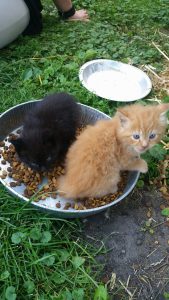
Hungry 
4 weeks old 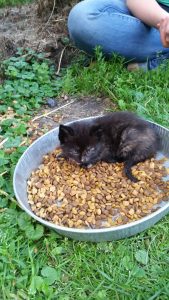
Getting tame