Christmas at Home, in the Office by Sheri LeClair Banitt

We live in world with many different religions, holidays and traditions. But I am a boomer and I believe in Christmas. Some of my earliest memories are going through the Sears, JC Penney, and Wards Christmas catalogs and circling the toys I wanted Santa to bring. For weeks, my siblings and I perused the catalogs with no thought or reason given to price or quantity, we just circled what we wanted and hoped for the best.

We had a big family dinner on Christmas Eve, alternating between my Grandmother’s house and her sister’s house. It was fun to see the cousins and have a big dinner. But the main attraction for the kids, were the presents under the tree. One of the grown-up men would ‘play Santa’ and pass out the presents that were from grandparents, great-grandparents, aunts, uncles, and cousins. Everyone got something and there was lots of laughter and fun. When the last present was opened long into the evening, we all headed home to our own houses to wait for Santa to come overnight.

We didn’t have a fireplace, so our stockings hung from the hall doorway. In the early morning, or the night when we woke up, our stocking would be at the foot of our bed. It was filled with candy, an orange, and peanuts in the shell. Our gift from Santa would be there as well. Sometimes we were sure we had heard or seen Santa in the night. It was always a thrill to go from bed to bed to see what our siblings got and to compare our treats. Later, Grandma and Grandpa would come over to see what Santa brought.

There was church too. Sunday school, programs, choir and worship. I appreciate those memories now as an adult. But the kid in me then, and now remembers the thrill of decorating the Christmas tree and the anticipation of ripping the paper and bows off the packages to see what was inside.

It is no surprise then, that I recreated these traditions with my own children. We had most of the same traditions, just new kids and fewer old ones. They were excited but maybe not as much as my generation. Because my generation did not get presents and parties and new clothes and toys for no reason. We got presents for birthdays and Christmas only. New clothes and shoes for back to school, Christmas and Easter only. We had fewer material possessions and spent more time outdoors. New toys and new clothes were a big deal, not just a passing thrill on payday.

Like many boomers, I carry the excitement of Christmas with me today. I go all in the day after Thanksgiving until after New Year’s Day. I have 22 hours of Christmas music in my library, and I’m always adding to it.

I bought my first Christmas Sweater in the late 1980’s. I went to Donaldson’s in St. Paul and bought 3 matching sweater vests; one for me, and one for each of my daughters. We couldn’t afford them, but I needed them. We were adorable that year in our matching vests and long blonde hair with big bangs. That was the beginning of a long run of Christmas sweaters; so common, I don’t even have pictures of them.

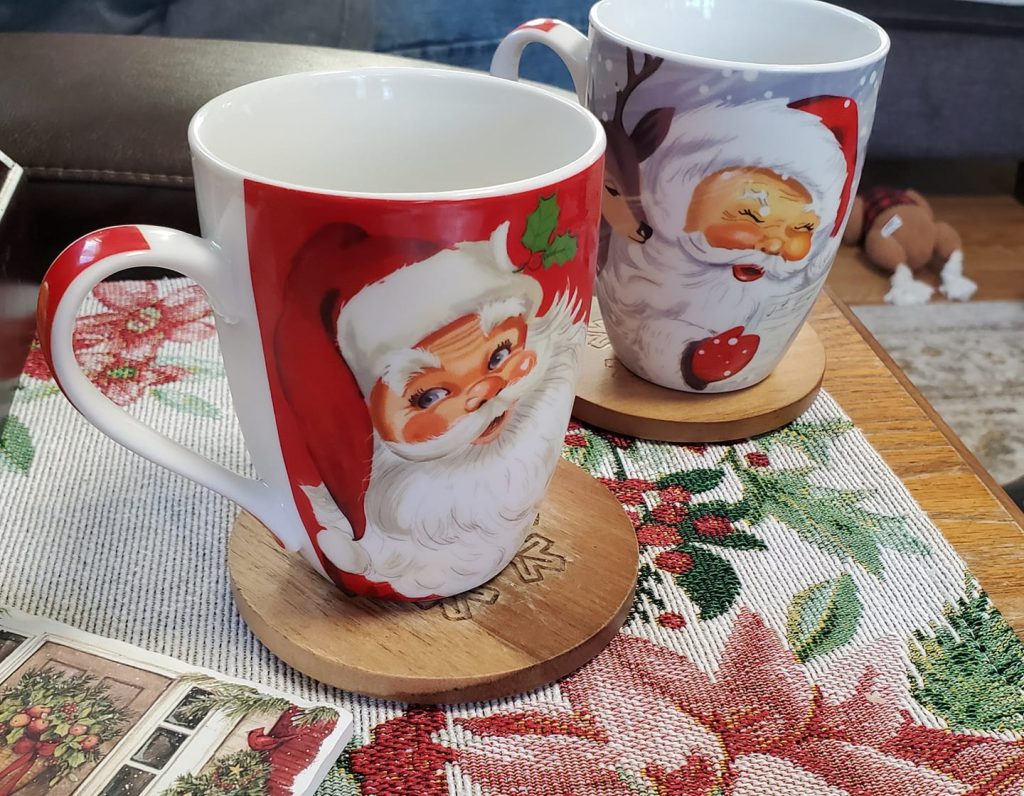
I wish I had known they would come back into fashion in the ugly sweater craze. They’re not ugly to me. I love the sweaters with snowmen, Santas, wreaths, bells, reindeer, trees, cookies, stockings and presents. I have spent the last several years collecting some beauties and have always looked forward to wearing them in the office at Christmas along with my very cheerful holiday jewelry and socks.

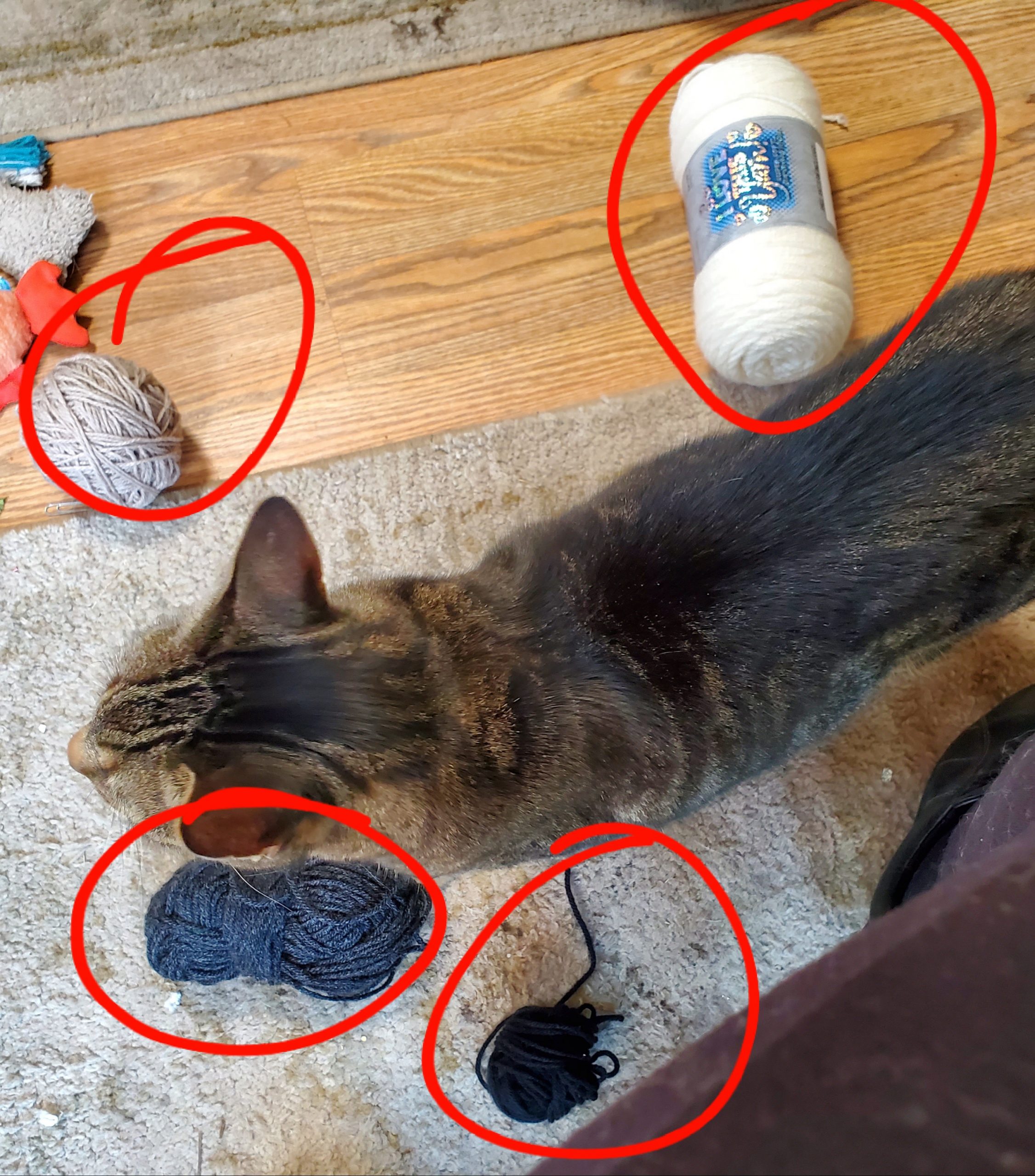
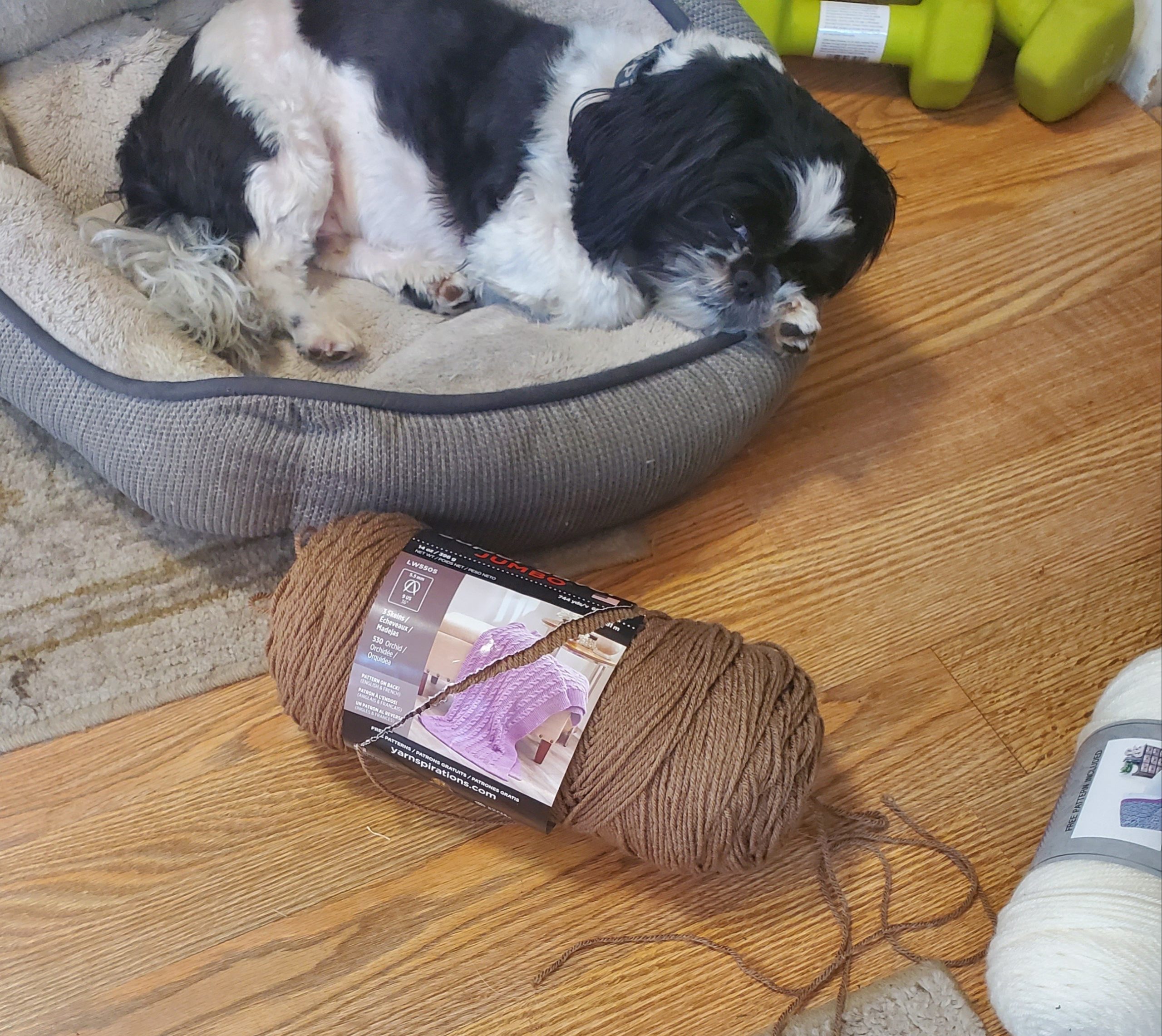
Now in 2020, I am working from home, by myself, at my desk in the family room. It’s just me and my furry coworkers at the office. But I still need the excitement of the Christmas season. I still need the lights and music and sweaters and jewelry and socks. So I get dressed each morning, ready for the office in my ugly sweater, jingle bell earrings, ornament pin and Santa socks. And I head downstairs to the office.

I stop along the way to have a cup of coffee with my dear one before he heads out to work; he is an essential worker and still goes to work each day. Then I log in to my computer and get started with my day. I hope to be in the actual office next year where I can show off my Christmas outfits. Until then, there is Zoom. Let me know if you’d like to meet for coffee.
Rona – Working from Home by Sheri LeClair Banitt

While many are out of work due to ‘The Rona’, (coronavirus-19) I am able to work from home. I am very grateful for this opportunity for several reasons:

  1. I am not in close proximity to my 3,200 co-workers in the high rise so I have less chance of getting covid. Bonus-I am away from all the cold and flu germs too.
  2. There is no work stoppage for my employer who provides important service to our customers.
  3. I continue to receive a paycheck.
  4. I no longer have a 45 minute commute one way to work.
  5. I can avoid the office distractions.
  6. I can wear comfy clothes, though I get up every day at 5:00 am and get dressed as usual.
  7. I can go for walks outside in my own community on breaks and over lunch.
  8. I have more energy without the commute and distractions, so I am more productive than ever.
  9. I am more relaxed at home and sleeping well.
  10. I am spending more time in my own space, making my own healthy food and enjoying my pets. I am living in the life I created for myself, instead of only wishing I could be there.

A Real Life Cat Lady-saving one litter at a time. By Sheri LeClair Banitt

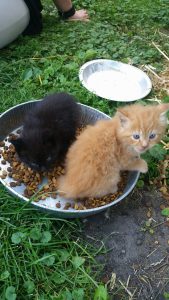
With my husband’s help, I feed a migrant community of feral cats. Twice daily, we greet 1 black cat and 3 tortoise shell cats at the food pans in the bushes.  Sometimes there is a black and white one, and sometimes an orange or tiger stipe cat and we can tell you their ancestry going back 5 generations.

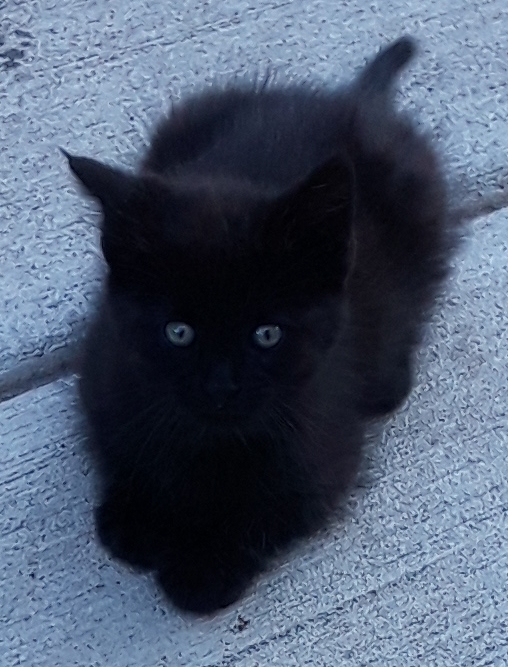
Midnight

I’m not bragging about this, and frankly, I wish I didn’t have to talk about this at all.  We came upon this cat population accidentally and now we’re trying to work our way out of it.

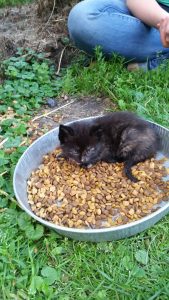
I came to know about feral cats because I am an avid gardener and animal lover. When I first discovered a little black kitten living in my garden under the Hostas, it was natural to want to feed him. He wasn’t friendly, and always ran when he caught sight of me, but he looked hungry, so I left food out for him. He was black, so we called him Midnight. He stuck around all that first summer and showed up periodically over the following winter. When summer came, Midnight disappeared and that was when a funny thing happened.

Starting to explore
Nest of Garden Kitties

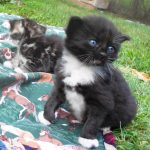
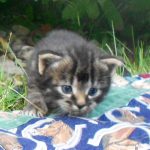
To my surprise the Hosta’s revealed a whole litter of kittens! They were tiny, and no sign of mamma cat but I figured she was around somewhere.

We left food out for the mamma kitty, and eventually we were able to handle the kittens with mamma nearby.  Just as we were about to catch the whole bunch of them for re-homing, mamma kitty disappeared and took all the kittens with her. Later that year when it got cold, Midnight and Mamma kitty returned and we fed them intermittently as they showed up.

It seemed that my garden was growing kittens. Year after year, kittens were born in the spring and the challenge was to find them and rehome them before the mamma cat disappeared. Whenever we found them, the mamma would move them to a new spot.  She often put them under the prickly bush on top of a pile of rocks. This seemed inhumane, so I went online to order a cat house where litters could live until they were old enough to re-home.

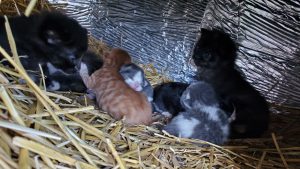
At the end of the order form, it said “personalize your house for no extra charge”.  I didn’t have a particular cat’s name to put on the house, but my daughter had a great idea.  And that is how the Halfway House came to be located in my lilac bushes.  

Safe inside
Home for wayward kitties; a bridge to domestic life.

Feral Cat Facts and FAQs

  • Feral cats are domestic cats that were born and raised with little or no contact with people
  • Feral cats are not stray cats. Strays are homeless pet cats, while ferals were born in the wild, and were never socialized to humans. They are usually unseen by humans.
  • These feral cats have highly developed instincts for survival, so they are extremely fearful of people. You don’t see them, but they are there in all communities.
  • Many people believe that cats can fend for themselves. Cat owners often abandon their cats when they move or simply no longer want the responsibility of pet ownership. Those cats survive only if they find food, shelter, and avoid dangers such as injury from cars, dogs, other cats, or abusive humans.
  • Feral cats often live in colonies, forming groups around food sources.
  • They are rarely spayed, neutered or vaccinated, and their offspring are raised without human contact. Within a few years, one or two cats can produce a colony of twenty or more. 
  • Feral and stray cats live difficult lives as they are susceptible to disease, starvation and the freezing conditions of trying to survive a Minnesota winter. Left on their own, they breed future generations of feral who live the same difficult lives.
  • The can also spread disease and harm native bird populations thru predation.
  • Killing feral cats does not reduce their numbers, as studies show new feral cats will soon take up their place.
  • There are two humane ways of controlling the feral cat population. One is by TNR – Trapping, Neutering and Returning them to where they were trapped.
  • The other is trapping and euthanasia.
  • Feral cats can have happy healthy lives outdoors. Humans can help that by TNR’ing feral cats.
  • Since house cats can sneak outdoors, you should always vaccinate, spay and neuter your pets and keep them indoors.
  • If you feed feral cats, you have to TNR, to prevent overpopulation.

My journey from Midnight to the Halfway House has taught me much about feral cats.  Over the past several years we have re-homed over 25 kittens. They have all made wonderful pets. 

Now we have a colony of 4 female cats and it is too many. We have since learned that there used to be funding in our area that allowed a local animal rescue to feed the feral cats and spay/neuter and vaccinate them.  As the funding dried up and disappeared the cats made their way to our neighborhood, which is close to the river so they have a water source and close to a restaurant which may provide garbage to eat.  When two others on the block moved and stopped feeding the cats, they found their way to our house.

I came to know about feral cats by chance encounter with one tiny kitten. You should care about feral cat populations because they could pass disease to people and pets, they can harm the native bird population and they are attracting other predators like coyotes and eagles into city limits.  They are in every neighborhood whether you see them or not and even whether you feed them or not.

What we can do about feral populations is to Trap, Neuter and Release back where they were trapped. By doing the TNR, we can keep our population static instead of increasing until it eventually decreases due to the age of the cats. Vaccinate, spay and neuter your indoor cats and keep them indoors. A brief escape can produce kittens.

The best place for a cat is indoors with a loving family.